NNOMY

What happens if I sign the papers then change my mind?

Short answer:

Once you take the oath at MEPS, getting out becomes very difficult.

Expanded:

Before taking the oath, you can walk away at any time. After the oath, you are bound by a legal contract. While there are discharge processes for hardship, medical issues, or conscientious objection, they are lengthy, stressful, and not guaranteed. Recruiters sometimes downplay how binding the commitment is. Young people deserve to know that enlistment is not like quitting a job — it is a legal obligation enforced by military law.

They say women are often sexually assaulted in the military. Is this true?

Short answer:

Sexual assault and harassment are widespread problems in the military.

Expanded:

Independent investigations and government reports have documented high rates of sexual assault, harassment, and retaliation against those who report it. Women — and many men — face risks that are significantly higher than in most civilian workplaces. Survivors often describe a culture where reporting can lead to punishment, isolation, or career damage. Anyone considering enlistment should understand these realities, not the sanitized version presented in recruitment materials.

How would I like being ordered around every minute of every day?

Short answer:

Military life is highly controlled — far more than most jobs or schools.

Expanded:

From the moment you wake up to the moment you sleep, nearly every part of your day is regulated: where you go, what you wear, how you speak, when you eat, and how you use your free time. Basic training is especially strict, but even after that, the chain of command shapes your daily life. Some people thrive in this environment; others find it stressful, dehumanizing, or emotionally draining. It’s important to imagine whether this level of control fits your personality and mental health needs.

Can’t I get citizenship if I enlist?

Short answer:

Enlisting does not guarantee citizenship.

Expanded:

While some non‑citizens have historically been able to apply for expedited naturalization through military service, policies have changed repeatedly. Background checks, security screenings, and shifting federal rules have made the process unpredictable. Many non‑citizen service members have faced delays, denials, or even deportation after serving. Anyone considering enlistment for immigration reasons should get independent legal advice — not rely on recruiter promises.

Can I be forced to enroll in JROTC at my school?

Short answer:

 No — JROTC is supposed to be voluntary.

Expanded:

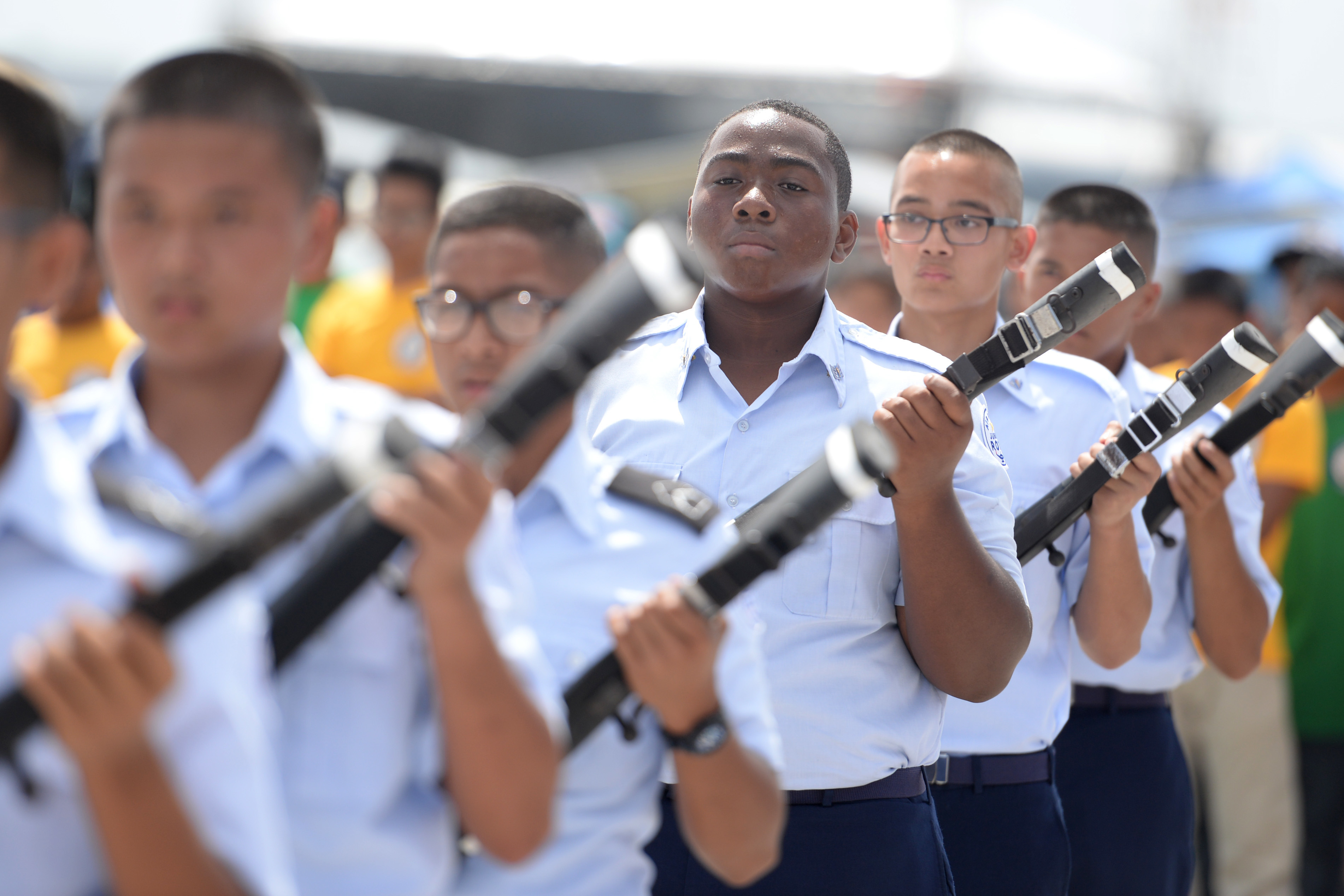
Federal law states that JROTC participation must be voluntary, but some schools have placed students in JROTC without consent due to scheduling issues or administrative pressure. Students and families have successfully challenged these practices. If a school tries to force enrollment, you have the right to request removal and to involve counselors, administrators, or advocacy groups. JROTC is not a requirement for graduation, and no student should be placed in a military‑modeled program against their will.

What are the rules about following orders? Are some orders illegal?

Short answer:

Yes, some orders are illegal — and you are responsible for knowing the difference.

Expanded:

Service members must follow lawful orders, but they are also required to refuse unlawful ones. This includes orders that violate the Constitution, international law, or the laws of war. The challenge is that in real‑world situations, the line is not always clear, and refusing an order can carry serious consequences. Young people deserve to understand that “just following orders” is not a defense under military or international law. You are accountable for your actions, even in a rigid hierarchy.


Am I ready to kill or be killed?

Short answer:

This is the most serious question you can ask yourself.

Expanded:

Military training is designed to condition people to use lethal force on command. Even if you never fire a weapon in combat, you are preparing for a role where killing is a possibility. Likewise, military service carries real risks of injury and death, even outside declared wars. Asking this question honestly is not weakness — it’s maturity. No recruiter can answer it for you, and no one should pressure you into ignoring the moral weight of taking a life or risking your own.


Subcategories

The NNOMY Opinion section is a new feature of our articles section. Writing on youth demilitarization issues is quite rare but we have discovered the beginning articles and notes being offered on this subject so we have decided to present them under an opinion category.  The articles presented do not necessarily reflect the views of the NNOMY Steering Committee.

General David Petraeus' rocky first days as a lecturer at the City University of New York Though the United States of America shares with other nations in a history of modern state militarism, the past 65 years following its consolidation as a world military power after World War II, has seen a shift away from previous democratic characterizations of the state.  The last thirty years, with the rise of the neo-conservative Reagan and Bush administrations (2), began the abandonment of moral justifications for democracy building replaced by  bellicose proclamations of the need and right to move towards a national project of global security by preemptive military force .

In the process of global military expansion, the US population has been subjected to an internal re-education to accept the role of the U.S. as consolidating its hegemonic rule internationally in the interest of liberal ideals of wealth creation and protectionism.

The average citizen has slowly come to terms with a stealthly increasing campaign of militarization domestically in media offerings; from television, movies and scripted news networks to reinforce the inevitability of a re-configured society as security state. The effect has begun a transformation of how, as citizens, we undertand our roles and viability as workers and families in relation to this security state. This new order has brought with it a shrinking public common and an increasing privatization of publicly held infrustructure; libraries, health clinics, schools and the expectation of diminished social benefits for the poor and middle-class. The national borders are being militarized as are our domestic police forces in the name of Homeland Security but largely in the interest of business. The rate and expansion of research and development for security industries and the government agencies that fund them, now represent the major growth sector of the U.S.economy. Additionally, as the U.S. economy continually shifts from productive capital to financial capital as the engine of growth for wealth creation and development, the corporate culture has seen its fortunes rise politically and its power over the public sector grow relatively unchallenged by a confused citizenry who are watching their social security and jobs diminishing.

How increasing cultural militarization effects our common future will likely manifest in increased public dissatisfaction with political leadership and economic strictures. Social movements within the peace community, like NNOMY, will need to expand their role of addressing the dangers of  militarists predating youth for military recruitment in school to giving more visibility to the additional dangers of the role of an influential militarized media, violent entertainment and play offerings effecting our youth in formation and a general increase and influence of the military complex in all aspects of our lives. We are confronted with a demand for a greater awareness of the inter-relationships of militarism in the entire landscape of domestic U.S. society.  Where once we could ignore the impacts of U.S. military adventurisms abroad, we are now faced with the transformation of our domestic comfort zone with the impacts of militarism in our day to day lives.

How this warning can be imparted in a meaningful way by a movement seeking to continue with the stated goals of counter-recruitment and public policy activism, and not loose itself in the process, will be the test for those activists, past and future, who take up the call to protect our youth from the cultural violence of militarism.

The "militarization of US culture" category will be an archive of editorials and articles about the increasing dangers we face as a people from those who are invested in the business of war. This page will serve as a resource for the NNOMY community of activists and the movement they represent moving into the future. The arguments presented in this archive will offer important realizations for those who are receptive to NNOMY's message of protecting our youth, and thus our entire society, of the abuses militarism plays upon our hopes for a sustainable and truly democratic society.

NNOMY


The Resources section covers the following topics:

News reports from the groups associated to the NNOMY Network including Social Media.

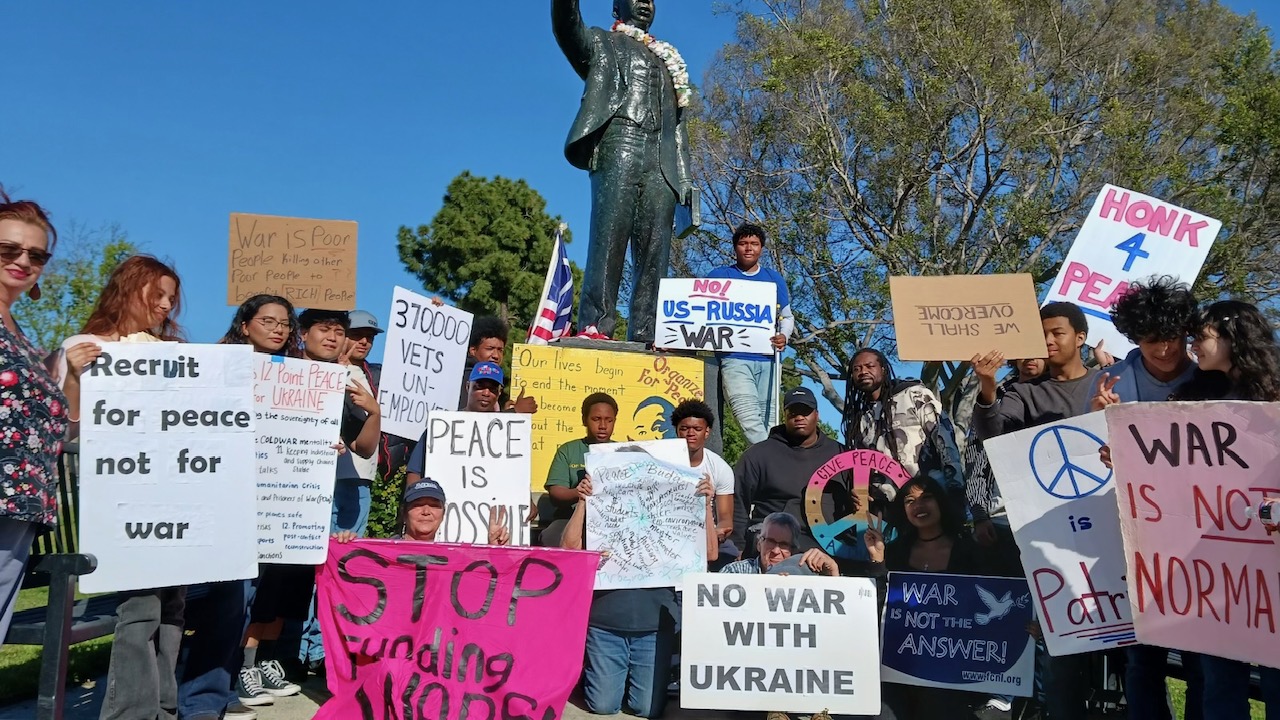
Reports from counter-recruitment groups and activists from the field. Includes information about action reports at recruiting centers and career fairs, school tabling, and actions in relation to school boards and state legislatures.

David SwansonDavid Swanson is the author of the new book, Daybreak: Undoing the Imperial Presidency and Forming a More Perfect Union, by Seven Stories Press and of the introduction to The 35 Articles of Impeachment and the Case for Prosecuting George W. Bush by Dennis Kucinich. In addition to cofounding AfterDowningStreet.org, he is the Washington director of Democrats.com and sits on the boards of a number of progressive organizations in Washington, DC.


Charlottesville Right Now: 11-10-11 David Swanson
David Swanson joins Coy to discuss Occupy Charlottesville, protesting Dick Cheney's visit to the University of Virginia, and his new book. -  Listen

Jorge MariscalJorge Mariscal is the grandson of Mexican immigrants and the son of a U.S. Marine who fought in World War II. He served in the U.S. Army in Vietnam and currently teaches at the University of California, San Diego.

Matt GuynnMatt Guynn plays the dual role of program director and coordinator for congregational organizing for On Earth Peace, building peace and nonviolence leadership within the 1000+ congregations of the Church of the Brethren across the United States and Puerto Rico. He previously served a co-coordinator of training for Christian Peacemaker Teams, serving as an unarmed accompanier with political refugees in Chiapas, Mexico, and offering or supporting trainings in the US and Mexico.

Rick JahnkowRick Jahnkow works for two San Diego-based anti-militarist organizations, the Project on Youth and Non-Military Opportunities and the Committee Opposed to Militarism and the Draft. He can be reached at: This email address is being protected from spambots. You need JavaScript enabled to view it.

Pat ElderPat Elder was a co-founder of the DC Antiwar Network (DAWN) and a member of the Steering Committee of the National Network Opposing the Militarization of Youth, (NNOMY).  Pat is currently involved in a national campaign with the Women's International League for Peace & Freedom project, Military Poisons,  investigating on U.S. military base contamination domestically and internationally.  Pat’s work has prominently appeared in NSA documents tracking domestic peace groups.


All Documents:

Pat Elder - National Network Opposing the Militarization of Youth

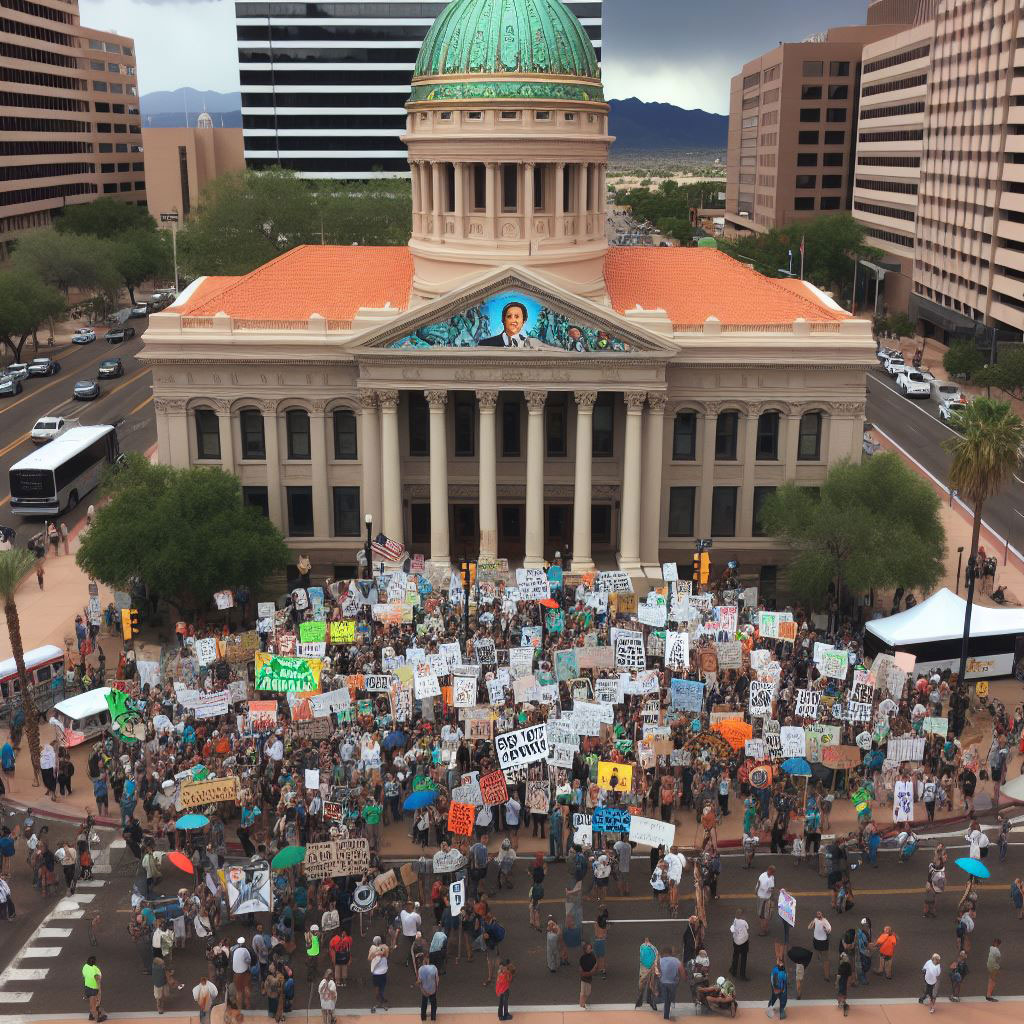
NNOMY periodically participates in or organizes events(e.i. conferences, rallies) with other organizations.

Answering Tough Questions about joining the military

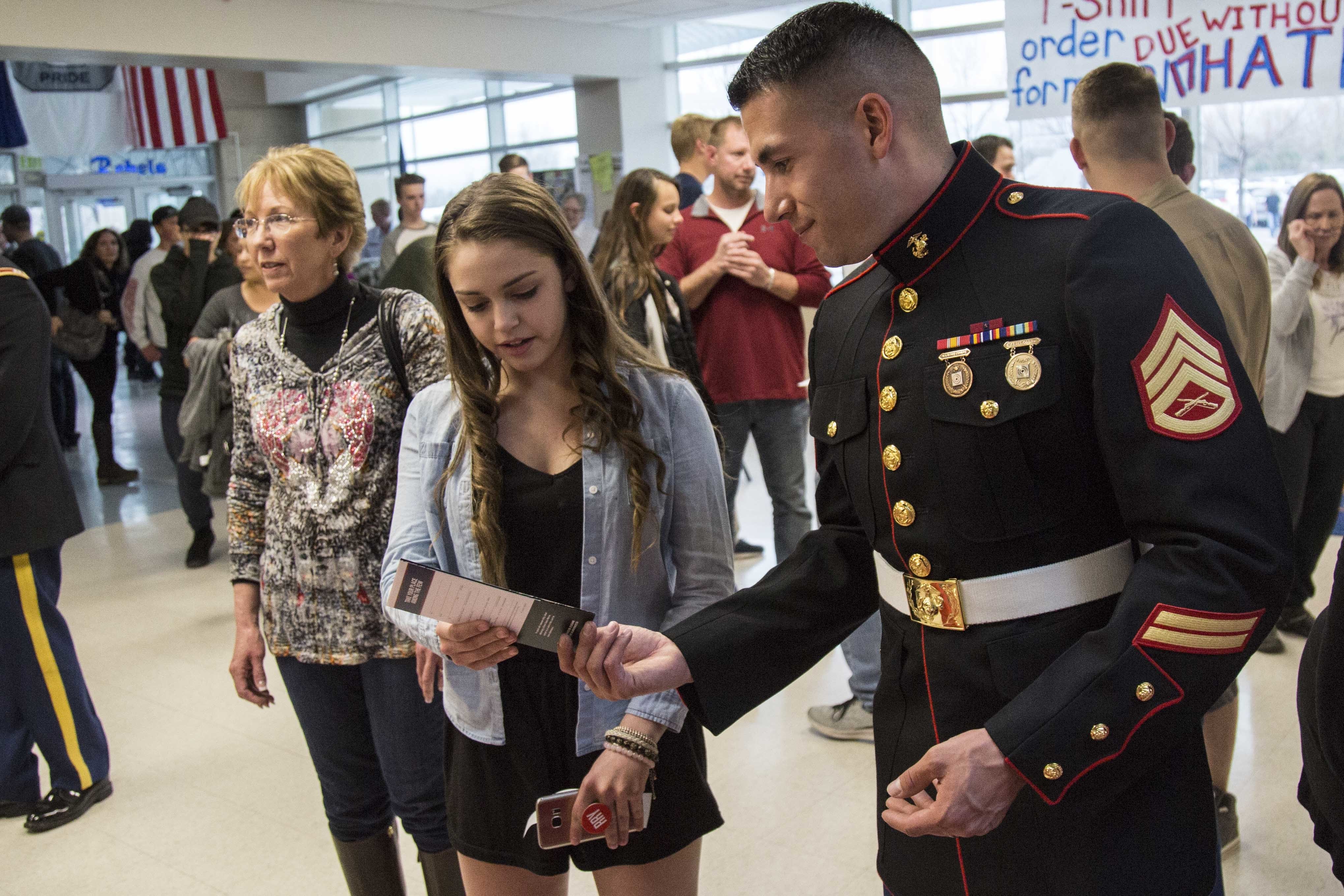
The "Answering Tough Questions” category is focused on essential questions about military recruitment, military service, the ethics of organized violence, and human survival in war. Each question is something a young person might ask or encounter realistically from a military recruiter, a teacher, a family member, a peer,  or even a counter military recruiter activist — and each answer is concise, factual, and ethically grounded, without drifting into fear‑based messaging.

      https://nnomypeace.net/toughquestions


The Counter-recruitment Essentials section of the NNOMY web site covers the issues and actions spanning this type of activism. Bridging the difficult chasms between religious, veteran, educator, student, and community based activism is no small task. In this section you will find information on how to engage in CR activism in your school and community with the support of the knowledge of others who have been working to inform youth considering enlisting in the military. You will also find resources for those already in the military that are looking for some guidance on how to actively resist injustices  as a soldier or how to choose a path as a conscientious objector.

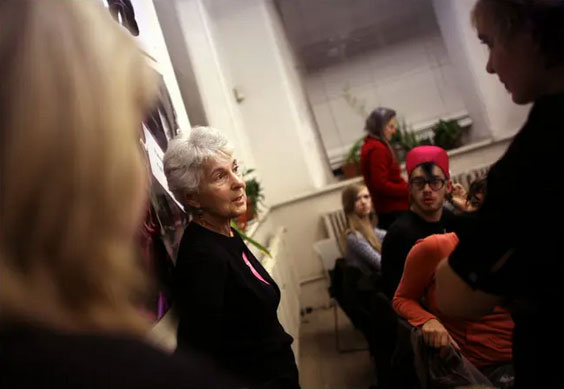
John Judge was a co-founder of the Committee for High School Options and Information on Careers, Education and Self-Improvement (CHOICES) in Washington DC, an organization engaged since 1985 in countering military recruitment in DC area high schools and educating young people about their options with regard to the military. Beginning with the war in Viet Nam, Judge was a life-long anti-war activist and tireless supporter of active-duty soldiers and veterans.


"It is our view that military enlistment puts youth, especially African American youth, at special risk, not only for combat duty, injury and fatality, but for military discipline and less than honorable discharge, which can ruin their chances for employment once they get out. There are other options available to them."


In the 1970's the Selective Service System and the paper draft became unworkable, requiring four induction orders to get one report. Boards  were under siege by anti-war and anti-draft forces, resistance of many kinds was rampant. The lottery system failed to dampen the dissent, since people who knew they were going to be drafted ahead of time became all the more active. Local draft board members quit in such numbers that even I was approached, as a knowledgeable draft counselor to join the board. I refused on the grounds that I could never vote anyone 1-A or eligible to go since I opposed conscription and the war.

At this point the Pentagon decided to replace the paper draft with a poverty draft, based on economic incentive and coercion. It has been working since then to draw in between 200-400,000 enlisted members annually. Soon after, they began to recruit larger numbers of women to "do the jobs men don't want to". Currently recruitment quotas are falling short, especially in Black communities, and reluctant parents are seen as part of the problem. The hidden problem is retention, since the military would have quadrupled by this time at that rate of enlistment, but the percentage who never finish their first time of enlistment drop out at a staggering rate.

I began bringing veterans of the Vietnam War into high schools in Dayton, Ohio in the late 1960s, and have continued since then to expose young people to the realities of military life, the recruiters' false claims and the risks in combat or out. I did it first through Vietnam Veterans Against the War/Winter Soldier Organization, then Dayton Draft & Military Counseling, and since 1985 in DC through C.H.O.I.C.E.S.

The key is to address the broader issues of militarization of the schools and privacy rights for students in community forums and at meetings of the school board and city council. Good counter-recruitment also provides alternatives in the civilian sector to help the poor and people of color, who are the first targets of the poverty draft, to find ways to break into the job market, go to a trade school, join an apprenticeship program, get job skills and placement help, and find money for college without enlisting in the military.

John Judge -- counselor, C.H.O.I.C.E.S.
 
Articles
References:
Videos
Tributes

###

Subscribe to NNOMY Newsletter

NNOMYnews reports on the growing intrusions by the Department of Defense into our public schools in a campaign to normalize perpetual wars with our youth and to promote the recruitment efforts of the Pentagon.

CLICK HERE

Search Articles

Language

FAIR USE NOTICE

This site contains copyrighted material the use of which has not always been specifically authorized by the copyright owner. We are making such material available in our efforts to advance understanding of issues connected with militarism and resistance. We believe this constitutes a ‘fair use’ of any such copyrighted material as provided for in section 107 of the US Copyright Law. In accordance with Title 17 U.S.C. Section 107, the material on this site is distributed without profit to those who have expressed a prior interest in receiving the included information for research and educational purposes. For more information go to: https://www.law.cornell.edu/uscode/17/107.shtml. If you wish to use copyrighted material from this site for purposes of your own that go beyond ‘fair use’, you must obtain permission from the copyright owner.

Donate to NNOMY

Your donation to NNOMY works to balance the military's message in our public schools. Our national network of activists go into schools and inform youth considering military service the risks about military service that recruiters leave out.

CONTRIBUTE by Check