Articles

Featured

Educación, no alistamiento

  English

12 de enero de 2026 / Natasha Souza / NNOMY - El ejército fue parte de mi vida mucho antes de que tuviera la edad suficiente para entender lo que significaba la guerra.

Mi padre sirvió en el Ejército. De niño, el despliegue no era un debate político abstracto; era la realidad de nuestro hogar. Irak. Afganistán. Cada despliegue traía consigo un miedo silencioso que se instalaba en la vida cotidiana. Cada regreso traía alivio, junto con la comprensión de que algo había cambiado. El ejército no recluta a una sola persona; atrae a familias enteras a su órbita. Esa realidad rara vez se reconoce y casi nunca se les revela a los jóvenes que luego son objeto de reclutamiento.

Esa experiencia vivida es la razón por la que el reclutamiento militar en las escuelas plantea serias preocupaciones éticas.

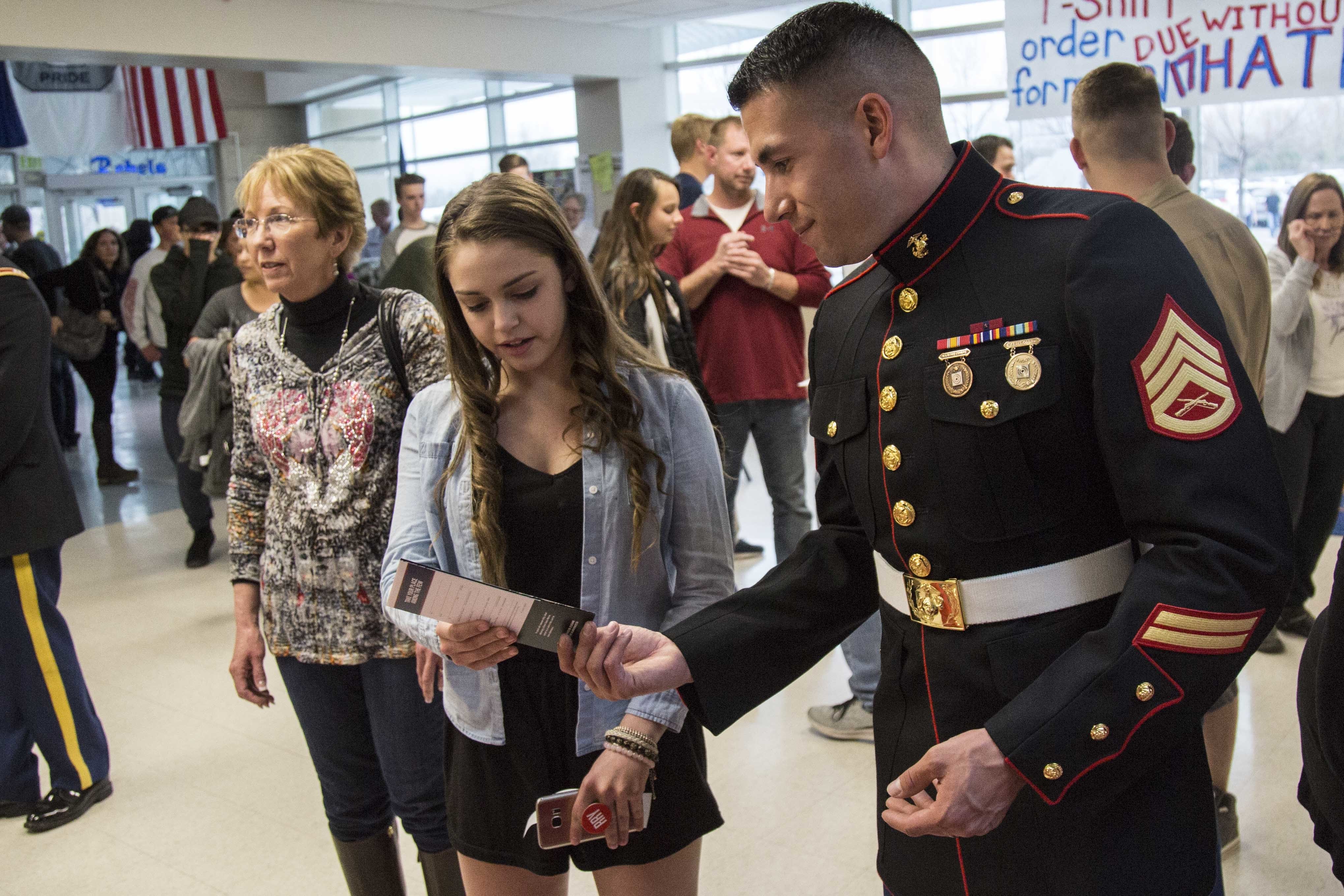
Se aborda a los adolescentes en una etapa de desarrollo donde aún están desarrollando su capacidad para comprender las consecuencias a largo plazo. Se les anima a firmar contratos legalmente vinculantes, redactados en un lenguaje complejo, mientras se les presenta una narrativa de servicio cuidadosamente seleccionada. Los reclutadores enfatizan las oportunidades (beneficios educativos, capacitación laboral, estructura), mientras minimizan u omiten las realidades de la pérdida de autonomía, la obligación indefinida, el riesgo físico y psicológico, y la incapacidad de rechazar órdenes una vez alistados.

Featured

Education, Not Enlistment

  español

January 12, 2026 / Natasha Souza / NNOMY - The military was part of my life long before I was old enough to understand what war meant.

My father served in the Army. Growing up, deployment was not an abstract policy debate—it was our household reality. Iraq. Afghanistan. Each deployment brought a quiet fear that settled into everyday life. Each return carried relief, alongside the understanding that something had shifted. The military does not enlist only one person; it pulls entire families into its orbit. That reality is rarely acknowledged, and almost never disclosed to the young people later targeted for recruitment.

That lived experience is why military recruitment in schools raises serious ethical concerns.

Teenagers are approached at a developmental stage where they are still forming the capacity to understand long-term consequences. They are encouraged to sign legally binding contracts written in complex language, while being presented with a carefully curated narrative of service. Recruiters emphasize opportunity—education benefits, job training, structure—while minimizing or omitting the realities of lost autonomy, indefinite obligation, physical and psychological risk, and the inability to refuse orders once enlisted.

Featured

Alarming Increase in Domestic Militarization

  español - 

January 2026 / Lauren Morales / Committee Opposed to Militarism & the Draft (COMD)  - For decades the United States has been a hypermilitarized country. The public is force fed the notion that we must respect the armed forces who are forever fighting to keep U.S. Americans safe at home and abroad. Yet there has always been a small part of society that challenges this indoctrination, recognizing that worshiping imperialist ideology is irreconcilable to national and global justice.

But what happens when the empire’s Department of Defense becomes the Department of War, and the war is being waged on our own cities and on our own people? Will members of mainstream U.S. confront their blind glorification of militarism when they see soldiers in the streets facilitating inhuman immigration policies and enforcing the criminalization of dissent? 

Featured

ICE plans $100 million ‘wartime recruitment’ push targeting gun shows, military fans for hires

A strategy document shared among immigration officials details plans to use influencers and geo-targeted ads to supercharge their push to hire thousands of deportation officers nationwide.

   español - 

December 31 / Drew Harwell, Joyce Sohyun Lee / Washington Post - U.S. Immigration and Customs Enforcement officials are planning to spend $100 million over a one-year period to recruit gun-rights supporters and military enthusiasts through online influencers and a geo-targeted advertising campaign, part of what the agency called a “wartime recruitment” strategy it said was critical to hiring thousands of new deportation officers nationwide, according to an internal document reviewed by The Washington Post.

The spending would help President Donald Trump’s mass-deportation agenda dominate media networks and recruitment channels, including through ads targeting people who have attended UFC fights, listened to patriotic podcasts or shown an interest in guns and tactical gear, according to a 30-page document distributed among officials in this summer detailing ICE’s “surge hiring marketing strategy.”

The Department of Homeland Security has spoken publicly about its fast-tracked effort to significantly increase ICE’s workforce by hiring more than 10,000 new employees, a surge promoted on social media with calls for recruits willing to perform their “sacred duty” and “defend the homeland” by repelling “foreign invaders.” The agency currently employs more than 20,000 people, according to ICE’s website.

Featured

Leave the Military Now

What does courage demand?

  español  - 

Oct 01, 2025 / Hamilton Nolan / How Things Work -  Six months ago, I wrote a piece urging soldiers to leave the United States military. At the time, the possibility that the president might use the military as a tool to unjustly abuse US citizens was still somewhat theoretical. At the risk of being repetitive, events in the world make me feel compelled to write, once again: Leave the military now. The time when you can say that you did not understand what might happen is coming to an end.

Yesterday, the Secretary of Defense and the Commander in Chief gave speeches to all of our nation’s generals, who they had ordered to assemble in Washington. It is bad enough, I imagine, for all of these accomplished career officers to be subjected to the performative tirade of Pete Hegseth, a childish television host, installed as their superior, ranting about the need to be more macho, fairly dripping with overcompensation for his various inadequacies. Yet if Hegseth’s speech was unnecessary, bigoted, and cartoonish, the performance of the Commander in Chief was much more substantively dangerous.

First, because it must have been clear to all of those assembled generals that Donald Trump, who possesses complete and total control of the military and its awesome powers, is, at best, mentally unwell. His speech, characteristically, was an incoherent stream-of-consciousness rant consisting mostly of narcissism and fiction and personal grievances. The mind of the man who has the ability to tell all of these officers what to do is broken and impervious to facts and reason. This is the man who can tell you when and how and who to kill.

Featured

Este programa rescató el reclutamiento del ejército

El secretario de Defensa cita un impulso de Trump. Pero el aumento del reclutamiento en el Ejército no habría sido posible sin el programa iniciado hace tres años en Fort Jackson.

  English - (Respuesta de NNOMY a este artículo a continuación

4 de octubre de 2025 / Greg Jaffe / Imágenes de Kenny Holston / New York Times  - Su camino hacia el Ejército comenzó el año pasado cuando perdió su trabajo como encargado de mantenimiento de un hotel y solo pudo encontrar trabajo recogiendo basura en un almacén de Amazon. A los 42 años, Joseph King había renunciado a cumplir con los requisitos de alistamiento militar.

Luego se enteró de un programa del Ejército, lanzado hace tres años durante una de las peores sequías de reclutamiento en la historia de Estados Unidos, que ayuda a aquellos que no son elegibles para unirse porque tienen sobrepeso o no pueden aprobar el examen de aptitud militar.

A finales de agosto, Joseph estaba en un aula en Fort Jackson, Carolina del Sur, con otros 13 aprendices, la mayoría de los cuales doblaban su edad. El instructor les mostraba cómo calcular los ingresos de un vendedor basándose en el salario, las ventas y las comisiones.

“¿Qué es una comisión?” preguntó el profesor.

Los aprendices guardaron silencio.

Featured

Opinion: Targeted military recruitment impacts Latine voter decisions

  español  -

September 11, 2024 / Valeria Martinez / Daily Orange - College students all over the country, including many students at Syracuse University, seem to take the privilege of higher education for granted. Meanwhile, in places like Laredo and the Rio Grande Valley, public school students lack the same academic support or resources that are commonplace in wealthier, and consequently, predominantly white areas. Upon moving to Syracuse, I learned that most of my peers didn’t grow up going to school sanctioned career fairs dominated by military recruiters. This contrast highlights the limited career opportunities available to Texan students like me, where many feel pressured to sacrifice their futures to a system that perpetuates poverty rather than pursue their true passions.

Similarly to many students throughout the United States, in Texas, I pledged allegiance to the U.S. and Texas flags every morning from pre-K through 12th grade. This regularly scheduled blind allegiance, combined with a curriculum that glosses over the lingering colonial realities of our history, have essentially indoctrinated students into believing that military service is not only honorable, but a duty.

According to the National Network Opposing the Militarization of Youth, military recruiters purposefully embed themselves in schools to foster a sense of “school ownership.” Military recruiters were omnipresent in my own Texan high school, often stationed near the cafeteria and enticing students with merchandise and “macho tests” like the pull-up bar. This presence, often normalized in Texan high school assemblies and classrooms, conditions students to accept military service as a necessary path.

Subscribe to NNOMY Newsletter

NNOMYnews reports on the growing intrusions by the Department of Defense into our public schools in a campaign to normalize perpetual wars with our youth and to promote the recruitment efforts of the Pentagon.

CLICK HERE

Search Articles

Language

FAIR USE NOTICE

This site contains copyrighted material the use of which has not always been specifically authorized by the copyright owner. We are making such material available in our efforts to advance understanding of issues connected with militarism and resistance. We believe this constitutes a ‘fair use’ of any such copyrighted material as provided for in section 107 of the US Copyright Law. In accordance with Title 17 U.S.C. Section 107, the material on this site is distributed without profit to those who have expressed a prior interest in receiving the included information for research and educational purposes. For more information go to: https://www.law.cornell.edu/uscode/17/107.shtml. If you wish to use copyrighted material from this site for purposes of your own that go beyond ‘fair use’, you must obtain permission from the copyright owner.

Donate to NNOMY

Your donation to NNOMY works to balance the military's message in our public schools. Our national network of activists go into schools and inform youth considering military service the risks about military service that recruiters leave out.

CONTRIBUTE by Check